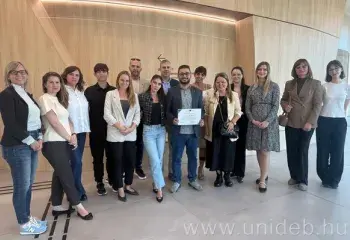
It was groups of students and young researchers, representing the professionals and decision-makers of the future, who took center stage at an international event organized by the Interreg VI-A Romania-Hungary Programme and hosted by the Institute of Chemistry at the Faculty of Science and Technology of the University of Debrecen on September 30. This recent event aimed to showcase successful Interreg ROHU projects implemented or completed in the Romanian-Hungarian border region and to encourage young people to recognize and identify regional challenges and to formulate new ideas for appropriate developments.
News
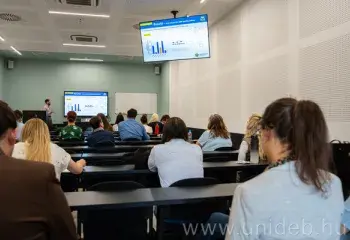
Several presentations were given on topics in pharmacology, pharmaceutical technology, pharmaceutical chemistry, and medical microbiology at the symposium of the Pharmacology and Microbiology Section of the Doctoral School of Medicine at the University of Debrecen. At the event held on Friday at the Faculty of Pharmacy, doctoral students reported on their scientific work and the results of their research to date.
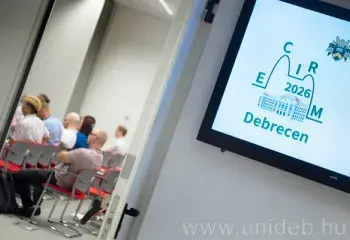
It is once again the University of Debrecen that hosted an international conference between September 6 and 9, dedicated to the precise understanding of inorganic chemical processes that are crucial to modern drug development, industrial catalysis and environmental protection technologies. At the most prestigious European forum for the study of inorganic reaction kinetics and mechanisms, the 7th ECIRM international conference, there were more than 60 researchers presenting their latest findings.
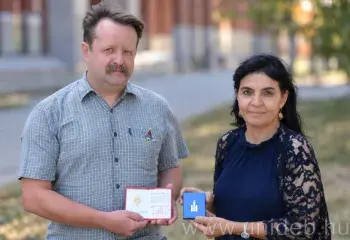
Gábor Sramkó, Assistant Professor at the Faculty of Science and Technology, has received unique international recognition. The Ministry of Education and Science of Mongolia honored him with a state award for his work in developing Mongolian-Hungarian bilateral relations and education in Mongolia. The biologist-researcher, who specializes on the genetic protection of endangered plant and animal species, received the highest professional recognition, awarded to foreigners only in exceptional cases.
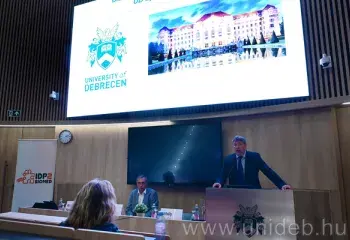
In 2026, the University of Debrecen hosted the annual meeting of the Hungarian Biochemical Society, which will be held in conjunction with an international conference. The event is the most prestigious domestic forum in the field of biochemistry, featuring scientific presentations and professional discussions, and two faculty members from the university will also receive prestigious professional recognition. The three-day conference opened on Wednesday, August 26, at the Learning Center.
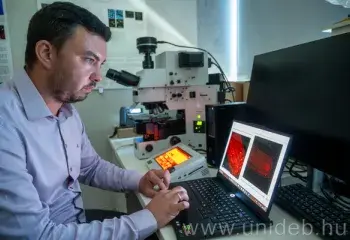
Even low concentration levels of toxins in apparently clean surface waters can be fatal to the plant kingdom, reveals one of the latest studies from the Department of Botany at the Faculty of Science and Technology (TTK) of the University of Debrecen. The study, published in the journal Environmental Pollution, presents at the cellular and molecular levels how toxic substances and herbicides in our environment damage the inner defense mechanisms of plant cells. These internationally significant findings have been recognized with the Count István Tisza Foundation for the University of Debrecen Publication Award.